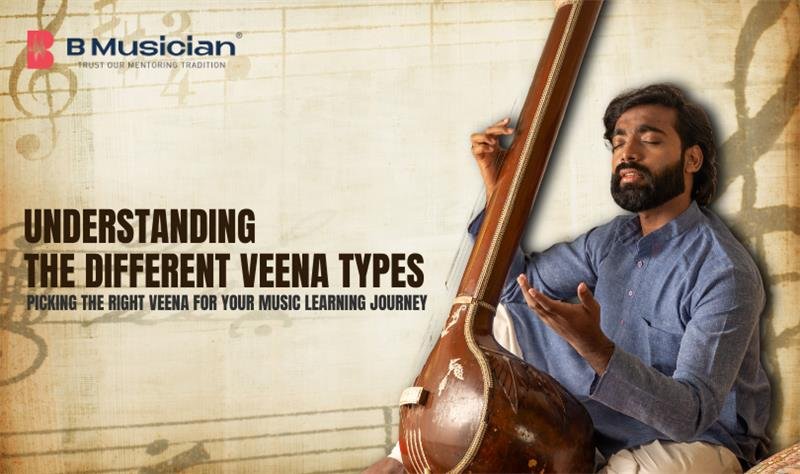
When I was a child, the veena felt like a storybook: heavy, resonant, and wrapped in myth. Years later, as a musician and teacher, I still find its voice irresistible, a carved wooden philosophy that shapes the way we listen, sing, and phrase. In this long read I’ll walk you through the origin and cultural relevance of the veena, its place in Carnatic music, the main types of veena, how they’re built, and how you, whether a beginner, intermediate player, or an advanced performer can choose the right instrument and budget. I’ll also touch on practical options like Veena lessons online so you can learn even if you’re not sitting in a Chennai music sabha.
A short origin story: where the veena comes from
The veena is one of the oldest named instruments in the Indian classical tradition. References to veena-like stringed instruments appear in archetypal Indian treatises — Bharata’s Natya Shastra and later texts — evolving across centuries into many regional forms. The ancient term “veena” originally described a class of string instruments rather than a single fixed design: in different eras and geographies it denoted harp-like, lute-like, and stick-zither instruments. Over time two distinct families crystallised in classical practice — the fretted, sustained Saraswati-style veena of South India and a variety of other veena forms in the North and elsewhere. For an overview of the instrument’s taxonomy and modern variants, see standard references on the veena.
Beyond the physical lineage, the veena is also woven into the cultural imagination: the instrument of Goddess Saraswati, the emblem of knowledge and aesthetics, and a recurring motif in temple sculpture and myth. Musically and mythically, few instruments carry such layered symbolism.
Relevance: musical and mythical
Musically, the veena’s timbre is immediately identifiable: a warm, woody sustain with a deep fundamental and a rich overtone series that makes gamakas (ornamentations) bloom. In Carnatic concerts, the veena is both a solo concert instrument and an accompaniment that can mirror the human voice closely; it shapes a melodic approach that values lyrical phrasing and sustained tonal control.
Mythically, images of the veena are everywhere. Saraswati seated cross-legged with the veena on her lap is a visual shorthand for learning and art. This symbolic weight has both helped preserve the instrument and created expectations: the veena, in public imagination, is dignified and classical. That can make it intimidating for beginners, but remember: instruments gain dignity from players, not the other way around.
Veena and Carnatic music: a natural partnership
In the South Indian (Carnatic) tradition the Saraswati veena is the primary veena that most learners and concert audiences picture. It has curved frets, a wide hollow resonating body, and sympathetic design features that support gamaka and microtonal inflection vital for Carnatic rāga expression. Over the last two centuries the veena’s concert repertoire, fingering conventions, and posture evolved specifically to serve Carnatic aesthetics: meend (slides across notes), kampitam (vibrato-like oscillation), and the slow expansion of rāga phrases are techniques that showcase the instrument’s expressive potential.
That said, the broader “veena” family crosses into Hindustani styles (e.g., rudra veena) and into fretless slide instruments (chitravina/gottuvadyam) that, while related, have distinct technique and repertoire. If your goal is Carnatic performance, the Saraswati veena is the most logical and historically grounded choice.
Different types of Veena — a beginner’s guide
When people ask me to explain the types of Veena, I break them down into a few practical categories — the ones students are most likely to encounter or consider:
- Saraswati Veena (Carnatic Veena)
The archetypal South Indian veena: fretted, with a large resonator (kudam) and a smaller gourd (tumba) at the far end; played resting on the lap and floor. It’s the classical concert veena for Carnatic music.
- Rudra Veena (Been, Dagar style)
A large, tubular fretted instrument used historically in dhrupad (Hindustani) and known for its grave, majestic timbre. It’s long and heavy — more common among specialists and style purists.
- Chitravina / Gottuvadyam (Chitra veena)
A fretless, slide-played instrument (20–21 strings in many modern instruments) closely associated with Carnatic virtuosos like N. Ravikiran and others. It’s technically demanding and produces a highly vocal, continuous glide across notes. It’s sometimes taught separately from fretted veena technique because a different touch and sliding technique is required.
- Vichitra Veena / Vichitra variants
A fretless plucked veena used in Hindustani music; relatively rare and specialist. It’s played with a slide and produces expressive meends.
- Other historic or regional veenas (yazh, saptatantri, etc.)
These are ancient variants — some reconstructed by scholars — that appear in temple iconography and historical texts. They aren’t commonly used in modern concerts but are relevant for cultural study.
Notes for learners: some instruments commonly discussed as “veena” variants (e.g., chitravina/gottuvadyam) have distinct technique and are often taught in separate streams. If you search for Veena lessons online you’ll likely find courses labelled for Saraswati veena and separate ones for chitravina/gottuvadyam.
The process of veena making understanding its structure
A veena is an artisanal object: it’s carved, assembled, and finished by luthiers whose trade is often passed across generations. Here are the structural components and an overview of the making process:
- Kudam (main resonator): Usually made from a single block of jackwood (kedong or jack tree), hollowed out and tuned by the dimensions and thickness of the wood. The kudam shapes the low end and sustain.
- Dandi (neck) and fretboard: The neck is a long, hollow, or solid extension carved and planed to accept frets (for Saraswati veena) or to remain smooth (for chitravina). Frets are metal, often tied or permanently fastened depending on tradition.
- Tumba (secondary gourd): In many designs a secondary hollow (gourd or wooden chamber) supports the far end to balance resonance and posture.
- Strings and bridges (jawari/bridge shaping): The position and curvature of the bridge(s) define tonal character. Jawari (the bridge shaping) is crucial for sustain and tonal brightness and is carefully adjusted by experienced makers or repairers.
- Tuning pegs and frets: Pegs may be wooden friction pegs or geared tuners; frets may be adjustable (tied) or fixed.
- Finish and decoration: Lacquer, varnish, inlay work — these are both aesthetic and protective.
A well-made veena needs time to settle: wood, strings, and finish react to humidity and seasons. That’s why many serious players invest in hand-crafted instruments from reputable luthiers and small workshops. Modern makers sometimes offer varnished/composite options that are cheaper and less sensitive to weather, but they change the tonal palette. If you care about classical timbre, wooden, hand-finished veenas are usually preferred. (For a practical buyer’s guide and price ranges, see the market overview below.)
How to choose your correct Veena — beginner, intermediate, advanced (and budget ranges)
Choosing a veena is a balance of ergonomics, sound, teacher preference, and budget. Below I’ve written practical guidance from the perspective of a teacher who’s helped many students select their first instrument.
Beginner: focus on ergonomics and playability
Who it suits: absolute beginners, school students, hobby learners, people taking their first year or two of lessons.
What to look for: comfortable weight, decent action (string height), stable tuning pegs, and a sound that is pleasant — it needn’t be concert-grade. Avoid instruments that are cracked, poorly joined, or have sloppy bridge work. If possible, try to buy from a respected shop or a luthier who offers a short warranty.
Approx budget (India, approximate market rates): ₹15,000 – ₹50,000. There are functional student Saraswati veenas and practice models in this band, including some factory-made instruments and well-priced handmade student models.
Intermediate: better materials, refined setup
Who it suits: learners with 2–5 years of lessons, those aiming for sahitya/pallavi work, students who perform at local sabhas.
What to look for: a properly carved jackwood kudam, good jawari and bridge shaping, stable frets (for Saraswati veena), and good sustain. At this level you want work that supports subtle gamakas. Prefer hand-carved instruments from experienced makers.
Approx budget: ₹50,000 – ₹1,20,000. Many serious intermediate Saraswati veenas and better chitravinas fall in this region; prices vary with wood quality, maker reputation, and finishing.
Advanced / Concert: artisan instruments and specialists
Who it suits: professional performers, recording artists, competition winners, people for whom the veena is a primary professional instrument.
What to look for: top-grade jackwood, expert jawari, flawless setup, possibly customised stringing, and a maker with a reputation for concert instruments. Many concert veenas are fine-tuned repeatedly by the player and the luthier. Rudra veenas, handcrafted dagar-style
instruments, or premium Saraswati veenas intended for dhrupad/carnatic soloists are in this category.
Approx budget: ₹1,20,000 – ₹2,50,000+ (and in rare cases higher). Specialist Rudra veenas and top concert instruments, especially those made by famous luthiers or rare wood, can command premium prices. Online catalogs and specialist shops show instruments in this range.
A practical note on prices: markets fluctuate. You’ll find shops listing Saraswati veenas around ₹1-1.5 lakhs for high-quality instruments, but reputable intermediate instruments can be closer to ₹60k–₹1 lakh depending on the maker and finish. There are lower-cost imports and factory models, but if you want authentic Carnatic timbre, invest in good wood and a reliable luthier.
Where to buy and what to ask the maker
- Buy local when possible: If you can inspect the instrument in person, you’ll understand weight, balance, and jawari.
- Ask about wood provenance and seasoning: Well-seasoned jackwood reduces the chance of cracks and improves tone.
- Check setup and warranty: Ask if the seller offers setup, bridge adjustments, and a short warranty or return policy.
- Talk to teachers and senior players: Many students buy second-hand concert instruments from retiring artists — this can be a bargain if conditioned properly.
- Online shops and catalogs: There are specialist shops and online luthiers selling veenas. Use them cautiously — ask for detailed photos, sound clips, and return policies. Market listings show a wide range of prices; cross-check before you commit.
Learning pathways: offline vs Veena lessons online
If travel, location, or schedule prevents you from attending a guru’s home or a local sabha, Veena lessons online are a great alternative. Here’s how I recommend structuring online learning:
- Begin with a teacher who can do video feedback. Technique and posture are visual; teachers who record and mark your lessons help correct posture, finger position, and stroke.
- Supplement with slow-motion and closeup videos. For gamaka and microtonal control, closeups help. Many teachers provide practice videos you can loop.
- Use metronome and recording tools. Record yourself daily and compare with model performances; use a slow metronome for gamaka practice.
- Find a learning community. Online forums, WhatsApp practice groups, and local music groups can provide performance chances and feedback.
If you search for Veena lessons online, you’ll find a mix of private teachers offering live lessons, structured courses, and free video resources. In my experience, blended learning — a primary teacher (online or offline) plus curated online resources — is the most effective for progressing beyond the basics.
Common mistakes learners make when buying or choosing a veena
• Buying purely on price without play-testing.
- Ignoring ergonomics — a heavy veena or poorly positioned kudam ruins practice comfort.
- Not factoring in climate: unseasoned wood and poor varnish lead to cracks in humid climates.
- Expecting immediate concert sound: even great veenas need setup and regular maintenance.
Practical care tips
- Keep the instrument away from direct sunlight and damp conditions.
- Loosen strings slightly if you won’t play for long stretches (but avoid leaving it completely slack).
- Get regular jawari maintenance from an experienced luthier.
• Use a soft cloth to keep lacquer and wood clean; avoid household solvents.
Final advice — choosing the right veena for your journey
Choosing a veena is a personal decision that combines aspiration, budget, and logistics. For a beginner, a good student veena between ₹15k and ₹50k lets you learn posture and basic technique without breaking the bank. As you progress into intermediate and concert levels, invest in an instrument that supports nuance — in the ₹50k–₹1.2 lakh band for serious students and ₹1.2 lakh upwards for concert instruments. Remember, the instrument is a tool for your musical voice — a great veena helps but doesn’t substitute steady practice and thoughtful guidance. If you can, pair your instrument purchase with reliable Veena lessons online or a local guru to accelerate progress.
Conclusion
The veena is both an instrument of exquisite tonal possibilities and a cultural emblem that has survived centuries of changing music practice. Understanding the main types of Veena — from the Saraswati veena to the chitravina/gottuvadyam and the Rudra veena — helps you make better choices as a learner. Think practically: match the instrument to your musical goals (Carnatic concert vs slide-style exploration), your physical comfort, and your budget.
If you’re starting out, prioritise usability and a supportive teacher — whether through Veena lessons online or locally. When you’re ready to invest more, look for a hand-carved instrument and a luthier who stands behind their work. In the end, the best veena is the one that invites you to practice every day and makes your musical intentions sing. If you want, I can help shortlist instruments based on your location and budget, or suggest a curriculum for the first six months of Veena lessons online tailored to your musical background.