History and Origin of Keyed Instruments
This rich history and heritage has been a key factor in the rise of learning to play keyboard, rise of personal and online lessons for keyboard and other keyed instruments like Harmonium, piano etc.
Ancient Beginnings:
The Emergence of Pipe Organ:

The Birth of Harpsichord:
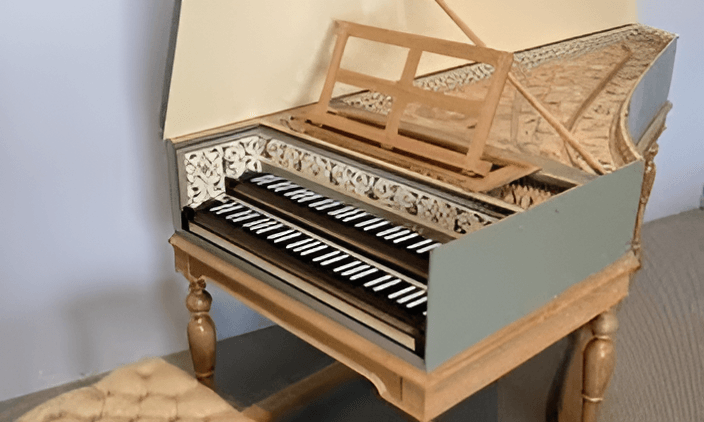
The revolutionary Piano:
Keyboard as an instrument in modern Era:
With the advent of industrial revolution and advancement in technologies, the 19th and 20th centuries witnessed a myriad of developments in keyboard instruments. The invention of electric organ in the mid 20th century followed by electronic synthesiser and digital piano brought forth new possibilities for sound manipulation and experimentation.
Rise and distinction between keyboard- piano- harmonium- and other keyed reed instruments
| Feature | Piano | Keyboard | Harmonium | Other Keyed Reed Instruments (Accordion, Melodica, etc.) |
|---|---|---|---|---|
| Definition | Acoustic instrument with strings struck by hammers. | Electronic or digital instrument that produces sound via speakers or amplification. | A free-reed instrument where air is pumped through reeds to produce sound. | Instruments like the accordion use a free-reed mechanism, with sound produced by air passing over reeds controlled by keys and bellows. |
| History | Invented by Bartolomeo Cristofori in 1700, evolved from harpsichord and clavichord. | Emerged in the 20th century with electronic advances. | Originated in Europe in the 19th century, brought to India by missionaries. | The accordion developed in early 19th-century Europe, evolving from earlier bellows-operated reed instruments. |
| Sound Production | Hammers strike strings to produce sound. | Sound is generated electronically or digitally, simulating different instruments. | Air is pumped through reeds by bellows, producing sound when keys are pressed. | Air is pumped through reeds via bellows; keys control airflow over reeds, producing sound. |
| Types | Grand, upright, baby grand, concert grand. | Synthesizers, digital pianos, workstations, MIDI controllers. | Portable, tabletop harmoniums, foot-pumped models (rare). | Accordions (button or piano accordion), concertinas, bandoneons. |
| Size and Portability | Large and heavy, not portable. | Lightweight and portable; some models are compact. | Relatively small and portable, often used in folk or devotional music. | Generally portable, though larger accordions can be heavy. |
| Touch Sensitivity | Weighted keys with full dynamic control (responds to pressure). | Varies: can be unweighted or semi-weighted; touch-sensitive on higher-end models. | Not touch-sensitive; volume and dynamics depend on how air is pumped through the bellows. | Accordion buttons or keys do not respond to touch sensitivity; volume is controlled by the bellows. |
| Maintenance | Requires regular tuning and maintenance of strings, hammers, and soundboard. | No tuning needed; minimal maintenance. | Requires maintenance for reeds and bellows; occasional tuning. | Reeds and bellows need maintenance and occasional tuning, especially for air leaks. |
| Cost | Expensive, particularly grand pianos. | Wide price range, from affordable beginner models to high-end. | Affordable compared to pianos, though professional models can be costly. | Varies depending on quality and size; professional accordions can be expensive. |
| Sound Variety | Limited to acoustic piano sounds. | Can mimic a wide range of instruments and tones, programmable. | Limited to harmonium sound; some models have multiple reed banks for slight tonal variation. | Limited to accordion or concertina sound, though some have switchable reed banks for tonal variety. |
| Amplification | Natural acoustic amplification. | Requires external amplification or built-in speakers. | No electronic amplification; relies on natural sound projection. | No electronic amplification, though some models have built-in mics for amplification in performances. |
| Pedals | Three pedals: soft, sostenuto, sustain. | Typically one sustain pedal; more pedals on higher-end models. | No pedals; sound and volume are controlled manually via bellows. | No pedals; sound controlled by bellows and key presses. |
| Primary Usage | Classical, jazz, traditional acoustic performances. | Used in various genres: pop, rock, electronic, orchestral, recording. | Primarily used in Indian, folk, and devotional music, especially in India. | Widely used in folk, traditional music, and tango (bandoneon), as well as popular in genres like polka. |
| Learning Curve | Requires physical effort and skill to master dynamics. | Easier for beginners due to lighter keys and digital aids. | Simple in terms of note production, but nuanced in bellows control. | Similar to harmonium, but with added complexity due to bellows and multiple reed banks. |
| Performance Dynamics | Wide dynamic range based on player’s control of touch and pedals. | Dynamic control varies based on model (unweighted vs. weighted keys). | Volume and expression controlled by pumping the bellows. | Volume and expression controlled by air pressure from the bellows. |
| Notable Players | Classical musicians (Chopin, Beethoven, Liszt). | Contemporary musicians, electronic artists (Stevie Wonder, Herbie Hancock). | Preferred musical instrument for folk, Carnatic, hindustani artists for regional performances. (Purushottam Walawalakar). Notable Bmusician faculty who was a reputed Carnatic Harmonium artist - Shri Palladam Venkataramana Rao. | Accordion virtuosos like Astor Piazzolla (bandoneon), folk musicians. |
Different types of Keyboards, Pianos, Harmoniums and other keyed instruments:
| Instrument Category | Type |
|---|---|
| Piano | Grand piano, Upright Piano, Baby Grand piano, Digital piano |
| Keyboard | Synthesizer, Workstation, Arranger keyboard, MIDI controller |
| Harmonium | Portable harmonium, Standard harmonium (single reed/double reed), Foot-pumped harmonium |
| Other Reed-Keyed Instruments | Piano accordion, Button accordion, Concertina, Bandoneon |



Final Inference:
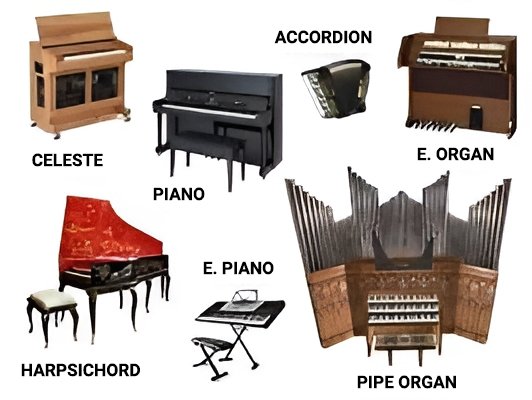
Together, these instruments demonstrate the diversity of musical expression available through keys, whether acoustically, electronically, or through reed-based sound production. With improvement and accessibility, a lot of scope for learning these instruments have come up in recent past in form of Online piano lessons, Online Harmonium lessons, Online keyboard lessons etc.
Today, learners can easily explore these instruments through various digital resources, including platforms that allow them to practice piano keyboard online with flexible and interactive tools.
Frequently Asked Questions
Q1: What is the main difference between a keyboard and a piano?
A: A piano is an acoustic instrument where strings are struck by hammers, producing natural resonance. A keyboard is an electronic instrument that digitally replicates piano sounds and many others. Keyboards are lighter, more affordable, and don’t require tuning, making them popular for beginners.
Q2: Is harmonium easier to learn than piano or keyboard?
A: Harmonium is generally considered easier to begin with for Indian classical and devotional music. Unlike piano, it requires only one hand to play melody while the other pumps air, and it doesn’t require the same level of finger independence. However, piano offers more long-term versatility.
Q3: Which is better for beginners — keyboard, piano, or harmonium?
A: For most beginners, a 61-key digital keyboard is the recommended starting point. It’s affordable, portable, and versatile across genres. If you’re focused on Indian classical or devotional music, a harmonium is excellent. Piano suits those committed to classical Western training.
Q4: Can a keyboard replace a piano for learning purposes?
A: A keyboard with weighted or semi-weighted keys can closely simulate piano playing for beginners and intermediate learners. For advanced classical piano technique, a full 88-key weighted keyboard or digital piano is recommended to develop proper finger strength and touch sensitivity.
Q5: Does a harmonium need electricity to play?
A: A traditional acoustic harmonium does not need electricity — it works by pumping air through bellows using hand or foot action. However, electronic harmoniums (electrones) do require power. Traditional harmoniums remain popular for their warm, organic tone in Indian classical settings.