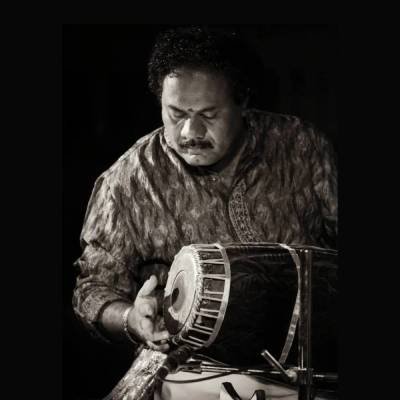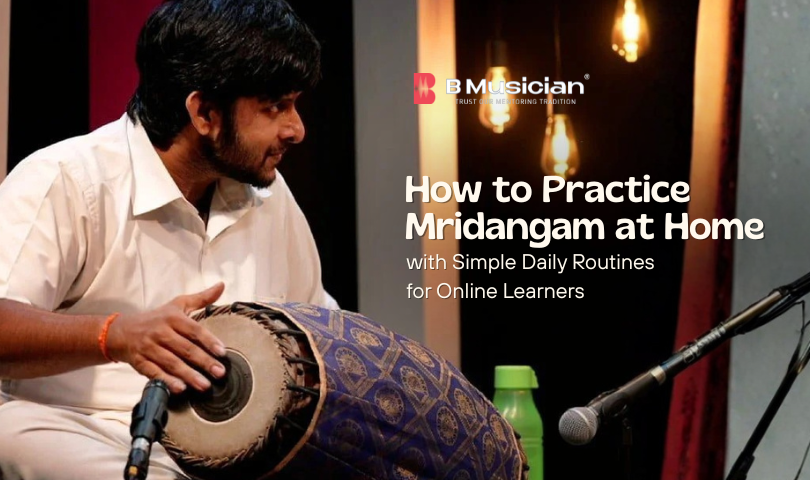
The mridangam, a traditional South Indian double-headed drum, has captivated musicians and audiences for centuries. Yet for most Western musicians and international learners, mastering this intricate percussion instrument seemed impossible—until now. The barrier of geography is no longer relevant thanks to online mridangam lessons that bring expert instruction directly to your home.
This blog explores how to practice mridangam at home effectively, building sustainable daily routines that complement online mridangam classes and accelerate your progress as a remote learner.
Understanding the Mridangam and Its Significance
The mridangam is far more than a percussion instrument; it’s the heartbeat of Carnatic classical music. This hand drum, made from wood and animal skin, produces two distinct tones: the deep resonant sound called “bhum” on the larger end and the sharper “thap” on the smaller end. What makes the mridangam uniquely challenging is its requirement for precise hand techniques, control of pressure and placement, and an intuitive understanding of complex rhythmic patterns and cycles (talas).
In Carnatic music, the mridangam communicates directly with the vocalist or melody instrument, maintaining rhythmic integrity while improvising within established structures. Learning mridangam develops not just technical drum skills but also deepens your understanding of Carnatic music theory, rhythm composition, and artistic expression. For international musicians discovering Carnatic music, the mridangam offers a path into one of the world’s most sophisticated musical traditions.
The Shift from Traditional to Online Mridangam Learning
Historically, learning mridangam required finding a guru, a master drummer willing to accept you as a student, typically in major Indian music hubs. This meant significant commitments: relocating internationally, investing substantial time and money, and adapting to a guru’s rigid teaching schedule and methodology. For Western musicians interested in Carnatic percussion, these barriers were often insurmountable.
Additionally, traditional learning provided limited flexibility. You practiced at your guru’s scheduled times, received limited guidance on independent practice, and had few resources for self-directed learning between sessions. International students faced the added challenge of cultural and language differences that sometimes complicated the learning process.
Online mridangam classes have fundamentally transformed this landscape. Today, you can learn from master drummers globally without leaving your home. Instructors now provide detailed guidance on home practice routines, recorded sessions for reference, and personalized feedback on your recordings. The combination of structured online mridangam lessons with self-directed practice routines makes serious mridangam study accessible to dedicated learners worldwide.
Why Daily Home Practice is Essential for Mridangam Learners
Mridangam mastery cannot be achieved through classroom time alone. Unlike some musical skills that can be developed through listening and observation, mridangam requires developing muscle memory, hand strength, and finger dexterity through consistent repetition. Your hands must learn to produce specific tones consistently, control pressure variations instantly, and execute complex hand movements automatically, skills that only develop through daily, focused practice.
When you learn mridangam online, your instructor provides the roadmap and corrections, but you build the actual skill through practice. Daily practice sessions, even if brief, create neural pathways that allow your hands to internalize patterns and techniques. Sporadic, lengthy practice sessions are far less effective than consistent, moderate-duration routines. This is why successful online learners establish daily mridangam practice rituals that become as regular as brushing their teeth.
Additionally, home practice allows you to work at your own pace, repeat difficult passages without feeling rushed, and build confidence before showcasing progress to your instructor. It’s where real learning happens classroom instruction is guidance; home practice is mastery.
Designing Your Daily Mridangam Practice Routine
An effective daily mridangam practice routine balances warm-ups, technique development, pattern practice, and creative application. Most successful online learners structure sessions around these components:
- Warm-Up Phase (5-10 minutes): Begin by loosening your hands, wrists, and fingers through gentle movements and light tapping. Practice basic strokes—single sounds (tha, ka, thom, dheem)—at gradually increasing tempos. This phase prepares your hands for more demanding work and prevents injury.
- Technique Drills (10-15 minutes): Focus on specific hand techniques your instructor has taught. If learning finger rolls, dedicate this time to perfecting them. If working on pressure control for different tones, practice producing consistent sounds. Choose one technique per session and master it before moving to others.
- Pattern Practice (15-20 minutes): Practice rhythm patterns (korvais) or sequences your instructor assigned. Start slowly, focusing on accuracy over speed. Gradually increase tempo as your muscle memory strengthens. Record yourself during this phase for self-evaluation and feedback sharing with your instructor.
- Repertoire or Creative Practice (5-10 minutes): Apply learned patterns to pieces you’re learning or improvise within structures your instructor has shown. This phase keeps learning enjoyable and demonstrates how techniques function in real musical contexts.
- Cool-Down (5 minutes): End with gentle tapping and hand stretches to relax muscles and prevent strain.
This structure totaling 40-55 minutes provides comprehensive skill development without overwhelming your schedule. Many busy professionals, students, and parents find that breaking this into two 20-30 minute sessions (morning and evening) works better than one longer session.
Getting Started: Setting Up Your Home Practice Space
You don’t need elaborate equipment to practice mridangam at home. Unlike keyboard instruments or guitars, mridangams are portable and relatively affordable compared to many Western instruments.
To optimize your practice environment, consider the following:
- Quiet Practice Space: Ensure your practice area is quiet enough for concentration and doesn’t disturb others.
- Good Lighting: Natural light is helpful for seeing hand positions clearly.
- Recording Equipment: Use a smartphone or tablet to record practice videos for self-evaluation and instructor feedback.
- Metronome App: Maintains steady tempo during pattern practice sessions.
- Comfortable Seating: Choose seating that allows proper posture while drumming.
- Music Stand: Helpful for displaying written materials and reference sheets during practice.
- Dedicated Learning Corner: Even if it’s just a corner of your bedroom, consistency of practicing in the same location helps establish a learning habit and minimizes distractions.
Before your first online mridangam lessons, discuss practice setup with your instructor. They can recommend specific equipment, suggest optimal practice techniques for your space, and provide guidance on avoiding common mistakes that develop from improper setup.
Complementing Online Lessons with Effective Home Practice
The synergy between online mridangam classes and home practice creates accelerated learning. Your instructor teaches concepts, demonstrates techniques, and identifies areas needing improvement. But the real skill development happens during your daily home practice sessions. Here’s how to maximize this partnership:
- Record Your Practice: Video record weekly practice sessions and share select recordings with your instructor. This allows detailed feedback on hand position, tone production, and rhythm accuracy without requiring extra class time.
- Follow Assignment Sheets: Successful online instructors provide specific practice assignments with clear objectives. Rather than vague instruction to “practice more,” they specify exactly which patterns to practice, at what tempo, and for how long.
- Track Your Progress: Keep a practice journal noting which techniques you’re mastering and which need more work. This documentation helps your instructor tailor lessons to your actual progress.
- Ask Specific Questions: When patterns don’t sound right during home practice, note the specific issue and ask your instructor for targeted advice. This turns practice challenges into learning opportunities.
- Maintain Consistency: More important than practice duration is consistency. Practicing 30 minutes daily surpasses sporadic 3-hour sessions. Your body develops muscle memory through regular repetition.
Tips for Maintaining Motivation During Your Learning Journey
Learning mridangam is rewarding but demanding. Maintaining motivation through the challenging early stages is crucial:
- Set Milestone Goals: Rather than vague aspirations like “become good at mridangam,” set specific milestones: “master five basic patterns by month three” or “perform a complete korvai by month six.” Achievement of concrete goals maintains motivation.
- Connect with Community: Join online forums or local Indian music groups. Sharing your journey with other learners provides encouragement and perspectives. Many communities host virtual jam sessions or practice groups.
- Celebrate Small Wins: Acknowledge when you finally execute a technique cleanly, increase your tempo significantly, or understand a complex rhythm structure. These incremental improvements represent real progress.
- Vary Your Practice: While consistency matters, occasionally changing what you practice prevents monotony. If pattern practice feels stale, dedicate a session to learning a new piece or exploring creative improvisation.
- Remember Your Why: Periodically recall why you chose to learn mridangam. Listening to inspiring performances or revisiting your initial motivation reignites enthusiasm during difficult phases.
- Be Patient with Setbacks: Some techniques take months to master. Plateaus are normal. Rather than abandoning learning, discuss frustrations with your instructor and adjust your approach.
Conclusion
How to practice mridangam at home with simple daily routines is no longer a mysterious process reserved for those living in India. Through learning mridangam online platforms, international musicians now have structured pathways to mastery. The combination of expert online instruction, thoughtfully designed home practice routines, and consistent daily effort creates genuine skill development that would have been impossible for most people just a decade ago.
Your mridangam journey begins not with talent or geographic location, but with commitment to daily practice combined with quality guidance. Whether you practice 30 minutes or an hour daily, consistency matters more than duration. You have access to master instructors and comprehensive learning resources regardless of your location.
Frequently Asked Questions
- Do I need prior percussion experience to learn mridangam through online classes?
No, prior percussion experience is not required to learn mridangam online. While musicians with any background may have slight advantages in understanding rhythm and tempo, complete beginners successfully learn mridangam through dedicated online instruction. Your instructor teaches all fundamental hand techniques, stroke production, and rhythm concepts from the beginning. Many successful online learners come from non-musical backgrounds and discover they have genuine aptitude for this instrument. What matters most is your willingness to commit to consistent practice and follow your instructor’s guidance rather than prior experience.
- How long does it take to reach a basic playing level in mridangam through online learning?
With consistent daily practice and quality online instruction, most learners reach a basic playing level—where they can confidently execute fundamental patterns and simple pieces—within four to six months. However, this timeline depends heavily on practice consistency and duration. Learners practicing 45-60 minutes daily progress significantly faster than those practicing sporadically. Your instructor can provide a more accurate timeline based on your specific learning pace, but expect initial progress to feel slow as you develop necessary hand strength and muscle memory. Intermediate competency typically takes 12-18 months of consistent practice.
- What equipment do I need at home to practice mridangam effectively?
You need a mridangam drum as your primary equipment, obtainable from online music retailers and specialty shops. Beyond the drum itself, ensure a quiet practice space and stable seating that allows proper posture. Many learners use a music stand for written materials and reference. A smartphone or tablet for recording practice videos is helpful for self-evaluation and sharing with your instructor. A metronome app maintains steady tempo during practice sessions. Headphones are optional but useful for listening to reference recordings. Unlike many Western instruments, mridangam requires minimal auxiliary equipment—the drum itself and a dedicated practice space are essentially all you need.
- How do online instructors provide feedback on your home practice progress?
Online mridangam instructors provide feedback through multiple channels. During live online classes, they observe your playing directly and offer real-time corrections on hand position, tone production, and rhythm accuracy. Most instructors request that students submit video recordings of their weekly practice sessions for detailed asynchronous feedback. Some provide written comments; others record video responses analyzing your technique specifically. Many platforms include progress tracking dashboards showing which patterns and techniques you’ve mastered. This multi-channel feedback approach ensures regular evaluation and adjustment of your learning path.
- Can I learn mridangam online while having a full-time job or busy schedule?
Yes, mridangam can be learned online while maintaining a full-time job or busy schedule. The key is consistent daily practice rather than long practice sessions. Many professionals find that two 25-30 minute practice sessions (morning and evening) integrated into their daily routine fits comfortably alongside work commitments. Online classes offer schedule flexibility—you can choose lesson times matching your availability. What makes online learning compatible with busy schedules is that you control when you practice; you’re not dependent on a teacher’s availability. Thousands of international professionals have successfully learned mridangam through this flexible approach.