Play the same melody twice, once slowly, once fast. Same notes, same pitches, same rhythm pattern. Yet the two versions feel like entirely different pieces of music. One might feel mournful and reflective. The other might feel playful and energetic. The only thing that changed was the speed. That speed is called tempo, and it is one of the most powerful tools in all of music.
If you’ve ever wondered what is a tempo in music, why it matters, how it’s measured, or how different musical tempos create entirely different emotional worlds, this guide answers all of those questions from the ground up. No prior music theory knowledge required. Tempo is one of the most accessible concepts in music and once you understand it, you’ll hear every piece of music differently.
For context on how tempo fits alongside the other core building blocks of music, the guide on the 7 elements of music is a great companion read.
In Music, What Does Tempo Mean?
The word tempo comes from the Latin word tempus, meaning time. In music, tempo refers to the speed at which a piece of music is performed specifically, how fast or slow the beats move forward in time.
Every piece of music has a pulse, a steady, underlying beat, much like a heartbeat. Tempo is the rate of that heartbeat. A fast tempo means beats arrive quickly, one after another. A slow tempo means each beat takes its time, spreading out and breathing before the next arrives.
Think of it this way: tempo is to music what pace is to walking. You can walk the same route at a brisk pace or a leisurely stroll. The route doesn’t change, but the experience of it changes completely. Tempo does the same thing to a melody, a chord progression, or an entire symphony.
Tempo vs. Rhythm: The Most Common Beginner Confusion
Before going further, it’s worth clearing up a confusion that trips up nearly every beginner: tempo and rhythm are not the same thing.
Tempo is the speed, how fast the beats are moving. It’s a single, consistent rate that runs underneath the entire piece (or section of a piece).
Rhythm is the pattern of long and short notes that sits on top of that steady beat. It’s the specific arrangement of note durations quarter notes, eighth notes, rests that creates the groove, the melody shape, or the drum pattern.
A helpful analogy: imagine a clock ticking steadily. The ticking is tempo constant and even. Now imagine someone clapping a syncopated pattern over that ticking. The clapping pattern is rhythm. The clock doesn’t change its tick to match the clapping, it stays steady while the rhythm dances around it.
You can play the same rhythm at any tempo. You can also change the tempo without changing the rhythm pattern at all. They are independent variables that work together to create the complete musical experience.
What Is BPM? Understanding Beats Per Minute
Tempo is measured in BPM (beats per minute). This is simply the number of beats that occur in sixty seconds of music.
A tempo of 60 BPM means one beat every second at the same rate as a clock ticking. This feels calm, unhurried, natural.
A tempo of 120 BPM means two beats every second twice as fast. This is roughly the tempo of a brisk walking pace and is one of the most common tempos in popular music worldwide.
A tempo of 200 BPM means beats arriving more than three times per second fast, energetic, demanding.
On a printed piece of sheet music, BPM is indicated with a metronome marking: a note value followed by a number, such as ♩ = 96. This tells the performer that each quarter note equals 96 beats per minute. This format removes all ambiguity, the number tells you exactly what speed is intended, regardless of how you interpret the Italian tempo term that might accompany it.
The metronome is the physical or digital device that produces a steady click or pulse at any chosen BPM, helping performers stay at the intended tempo during practice. BMusician’s free online metronome tool is a great resource for this you can set your exact BPM and practice against a steady reference at any point in your learning journey.
All the Major Tempo Terms in Music: From Slowest to Fastest
Historically, composers have used Italian words to indicate tempo on sheet music. These terms for tempo in music carry both a speed range and a mood or character. Understanding them helps you know not only how fast to play but also the spirit the composer intended.
Here is the complete spectrum of different tempos in music, ordered from slowest to fastest, with their approximate BPM ranges and character descriptions:
Grave (20–40 BPM) – The slowest of all tempo markings. Heavy, solemn, and deeply serious. Used for passages of mourning, great weight, or profound gravity. Rarely encountered outside of classical and sacred music.
Largo (40–60 BPM) – Very slow and broad. Majestic and expansive. Conveys dignity and solemnity without the heaviness of Grave.
Larghetto (60–66 BPM) – Slightly faster than Largo. Still very slow, but with a little more movement and warmth.
Adagio (66–76 BPM) – Slow and stately, with deep expression. One of the most emotionally rich slow musical tempo markings. Frequently used for lyrical slow movements in classical sonatas and concertos.
Adagietto (70–80 BPM) – Slightly faster than Adagio. Gentle and tender, often used for intimate or reflective passages.
Andante (76–108 BPM) – A walking pace. The word literally means “going” or “walking” in Italian. Flowing, moderate, and natural — the baseline speed of much beginner music.
Andantino (80–108 BPM) – A somewhat ambiguous term that in modern practice usually means slightly faster than Andante, though historically it was debated. Lighter and more delicate than Andante.
Moderato (108–120 BPM) – Moderate speed. Neutral and balanced, without strong character bias in either direction. The musical equivalent of a comfortable, unhurried pace.
Allegretto (112–120 BPM) – Moderately fast. Lighter and more graceful than Allegro — brisk but not rushed. Often used for dance-like or playful passages.
Allegro (120–156 BPM) – Fast and lively. The most commonly encountered tempo marking in all of classical and contemporary music. Energetic, confident, and purposeful.
Vivace (156–176 BPM) – Lively and vivacious. Faster and more spirited than Allegro. The music sparkles and moves with vitality.
Presto (168–200 BPM) – Very fast. Demands high technical command. Creates excitement, urgency, or brilliance.
Prestissimo (200 BPM and above) – As fast as possible. Extreme and rare. Encountered in virtuosic passages designed to test the limits of what a performer can execute cleanly.
These are the core, what is a tempo marking in music terms you will encounter across classical, film, and contemporary repertoire. For the full picture of how these terms appear as symbols on a page of sheet music alongside dynamics, articulation, and other notation, the guide on music symbols for musical notes expands on all of them in detail.
How Tempo Shapes Emotion and Mood
Tempo is one of music’s most direct emotional levers. The psychological relationship between speed and feeling is built deeply into human perception.
Fast tempos tend to evoke energy, excitement, urgency, joy, or agitation. A piece at 160 BPM feels fundamentally different from the same melody at 60 BPM, the faster version activates the nervous system, elevates heart rate, and creates forward momentum.
Slow tempos create space for reflection, tenderness, grief, reverence, or intimacy. They allow each note to resonate and breathe, giving the listener time to feel each moment rather than rushing past it.
Medium tempos provide stability and groundedness. They feel natural and conversational neither charged with urgency nor heavy with introspection.
This is why film composers choose tempo so deliberately. A chase scene and a love scene might use similar melodic material but at radically different speeds, creating completely different emotional worlds from the same musical raw material.
Tempo Changes Within a Piece: Rubato, Ritardando, and Accelerando
Tempo doesn’t always remain fixed throughout an entire piece. Composers use several techniques to shift tempo for expressive effect.
Rubato – Literally “robbed time” in Italian. The performer stretches and compresses the tempo freely within phrases pulling back here, rushing slightly there to add expressiveness and emotional nuance. Rubato is not random; it follows the natural language and phrasing of the music. It is a hallmark of Romantic-era performance practice and is especially associated with piano and violin repertoire.
Ritardando (rit.) and Rallentando (rall.) – Both indicate a gradual slowing of tempo. Ritardando is a more deliberate deceleration; rallentando suggests a broader, more relaxed easing back. Both are common at phrase endings and final cadences, giving the music a sense of settling and arrival.
Note: these are Italian musical terms, not names, a distinction worth clarifying for all beginners.
Accelerando (accel.) – A gradual increase in speed. Creates mounting excitement, urgency, or drive. Often used to build toward a climactic passage.
A tempo – After any deviation from the original speed, a tempo instructs the performer to return to the established tempo immediately.
Fermata (𝄐) – While not a tempo change per se, a fermata suspends the beat on a specific note, holding it longer than its written value at the performer’s discretion, effectively pausing the forward movement of time. When the fermata ends, the tempo resumes.
Tempo vs. Time Signature: Another Important Distinction
Beginners sometimes confuse tempo with time signature, they are related but serve entirely different functions.
A time signature (such as 4/4, 3/4, or 6/8) tells you how many beats are organized within each measure and what type of note receives one beat. It defines the rhythmic structure and grouping of the music.
Tempo tells you how fast those beats move. A piece in 4/4 time at 60 BPM feels completely different from a piece in 4/4 time at 160 BPM. The time signature is the same, the experience is entirely different. Tempo is speed; time signature is structure. Both are essential, but neither can substitute for the other.
Tempo in Indian Classical Music: The Concept of Laya
One of the distinctive strengths of BMusician is its deep grounding in Indian classical music traditions and tempo has a rich, nuanced counterpart in this system.
In Indian classical music, the concept of Laya governs the pace and speed of a performance. Laya is not just a speed setting it is a felt, living quality of time that performers cultivate through years of dedicated practice.
The three primary levels of Laya are Vilambit (slow), Madhya (medium), and Druta (fast). An advanced fourth level, Ati-druta, refers to an extremely rapid pace encountered in advanced percussion and vocal performances.
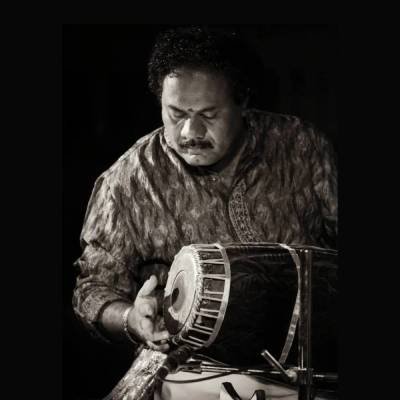
In Carnatic and Hindustani traditions, musicians internalize these tempo levels through sustained practice with percussion accompaniment mridangam, tabla, or through the rhythmic vocal art of Konnakol. The relationship between the soloist and the rhythmic pulse is dynamic and deeply responsive rather than mechanically fixed. Students in Mridangam lessons and Konnakol lessons develop Laya awareness as one of their foundational skills from the very earliest stages of training. The intersection of Indian rhythmic practice with Western tempo understanding is explored further in the guide on mastering polyrhythm through Carnatic music and Konnakol.
How Tempo Varies Across Instruments and Roles
Not every instrument experiences tempo the same way. In any ensemble or band, different musicians relate to tempo through different responsibilities:
Percussionists are the primary timekeepers. Drummers and percussionists whether playing a drum kit, tabla, or mridangam hold the tempo as their central responsibility. Their primary job is to establish and maintain the pulse. Students in online drum lessons develop tempo stability as one of their most essential early skills.
Melody instruments (violin, flute, guitar, piano, vocals) ride on top of the established pulse, using that stable foundation to express rhythmic flexibility. A violinist might apply rubato over a steady tempo framework. A singer might stretch a phrase slightly while the accompaniment holds the beat.
Keyboard and piano players often carry both roles simultaneously maintaining rhythmic regularity in the left hand while expressing melodic freedom in the right. Students in keyboard lessons learn to coordinate these two functions independently.
In an orchestra, the conductor unifies all of these individual tempo relationships into one shared pulse, using baton technique and physical gesture to set, maintain, modify, and express tempo for the entire ensemble.
Practical Tips for Developing a Strong Sense of Tempo
Tempo awareness is a skill, not a talent. It is built through specific, consistent habits:
Practice with a metronome from day one
Every beginner should build the habit of practicing with a metronome regularly. Start any new piece at a significantly reduced BPM around 60% of the target tempo and increase only when you can play cleanly three times in a row. BMusician’s free online metronome makes this accessible instantly, with no equipment required.
Tap your foot or nod your head
Physical connection to the beat internalizes tempo in a way that purely mental counting cannot. Whether you tap your foot, nod your head, or sway slightly, embodying the beat helps stabilize your internal pulse under performance pressure.
Clap before you play
Before starting any new piece, clap the beat at the intended tempo four to eight times. This establishes the pulse in your body before your hands or embouchure have to manage it alongside notes.
Record and listen back
Rushing and dragging are almost impossible to detect while you’re playing. Recording yourself and listening back reveals tempo inconsistencies particularly at phrase beginnings after rests, and during technically difficult passages where players almost universally slow down unconsciously.
Practice without the metronome too
A metronome is a training tool, not a permanent crutch. Alternate between metronome practice and free practice to develop your own internal clock rather than always depending on an external reference.
Why Tempo Matters More Than Beginners Realize
Beginners naturally focus on hitting the right notes. But experienced musicians and teachers know that tempo is felt before notes are heard. The speed and pulse of music is the first thing the body responds to before the brain processes melody or harmony.
Getting tempo right is what makes music feel like music rather than a sequence of correctly played notes. A passage played at the wrong tempo too fast for the phrase to breathe, or too slow for the energy to sustain sounds wrong even when every note is correct.
Developing a reliable internal sense of tempo, understanding the full range of musical tempos from Grave to Prestissimo, and learning how tempo interacts with rhythm, time signature, and expression gives any beginner a significant head start in sounding musical from very early in their learning journey. Whether you’re developing your pulse through guitar, piano, mridangam, or any other instrument at BMusician, tempo is always taught as a felt, living experience not just a number on a page.
Frequently Asked Questions
The beat is the individual pulse unit each recurring tick of time that you clap along to when you hear music. Tempo is the rate at which those beats arrive how fast or slow the pulse moves. Think of the beat as the individual footstep and tempo as the walking speed. A fast tempo means beats arrive quickly; a slow tempo means they are spaced further apart. Every piece of music has both: the beat provides the unit of measurement, and the tempo determines how fast you count through those units. You cannot have tempo without a beat, but the beat itself exists independently of any particular speed.
For most beginners learning a new piece, starting at 50-70% of the target performance tempo is the most effective approach. If a piece is marked Allegro at 120 BPM, a productive beginner practice tempo is 60-80 BPM slow enough to place every note accurately without rushing, but fast enough to maintain the character and phrase shape of the music. The goal is to increase tempo only when the passage is clean and comfortable at the current speed. Practicing consistently at too fast a tempo embeds errors into muscle memory, while practicing too slowly can disconnect the physical actions from the intended musical feel.
Several factors cause unintentional tempo fluctuation. Technically difficult passages cause most players to unconsciously slow down, while familiar or easy passages tend to speed up. Emotional involvement can also compress or expand tempo excitement drives tempo faster, and expressive, lyrical moments pull it back. These fluctuations are often inaudible to the performer in the moment but very clear on a recording. Intentional tempo flexibility rubato, ritardando, accelerando is a deliberate expressive choice made by the performer or indicated by the composer. The key distinction is whether the tempo change serves the music or simply reflects a lack of technical control.
120 BPM is considered moderate to moderately fast in standard musical terms. It corresponds roughly to the Allegro/Moderato range and is approximately the speed of a brisk walking pace or a confident heartbeat during light activity. It is one of the most common tempos in popular music, dance music, and classical Allegro movements. Below 80 BPM generally feels slow; above 160 BPM generally feels fast. 120 BPM sits squarely in the energetic but accessible middle fast enough to feel lively, slow enough to execute cleanly with practice. For beginners, 120 BPM is a challenging but achievable target tempo for most intermediate-level pieces.
In Western classical music, tempo is primarily communicated through Italian terms and precise BPM metronome markings, with the expectation of relatively consistent adherence to the marked speed. In Indian classical music, tempo is governed by the concept of Laya, a felt, organic quality of time organized into three primary levels: Vilambit (slow), Madhya (medium), and Druta (fast). Indian classical performances often begin in a slow Laya and gradually increase toward faster speeds within a single performance, creating a structural arc of acceleration that is part of the aesthetic experience itself. Rather than being fixed at the outset by a marking, Laya in Indian classical music is a living, breathing dimension of the performance that develops in real time between the soloist and the rhythm accompanist.